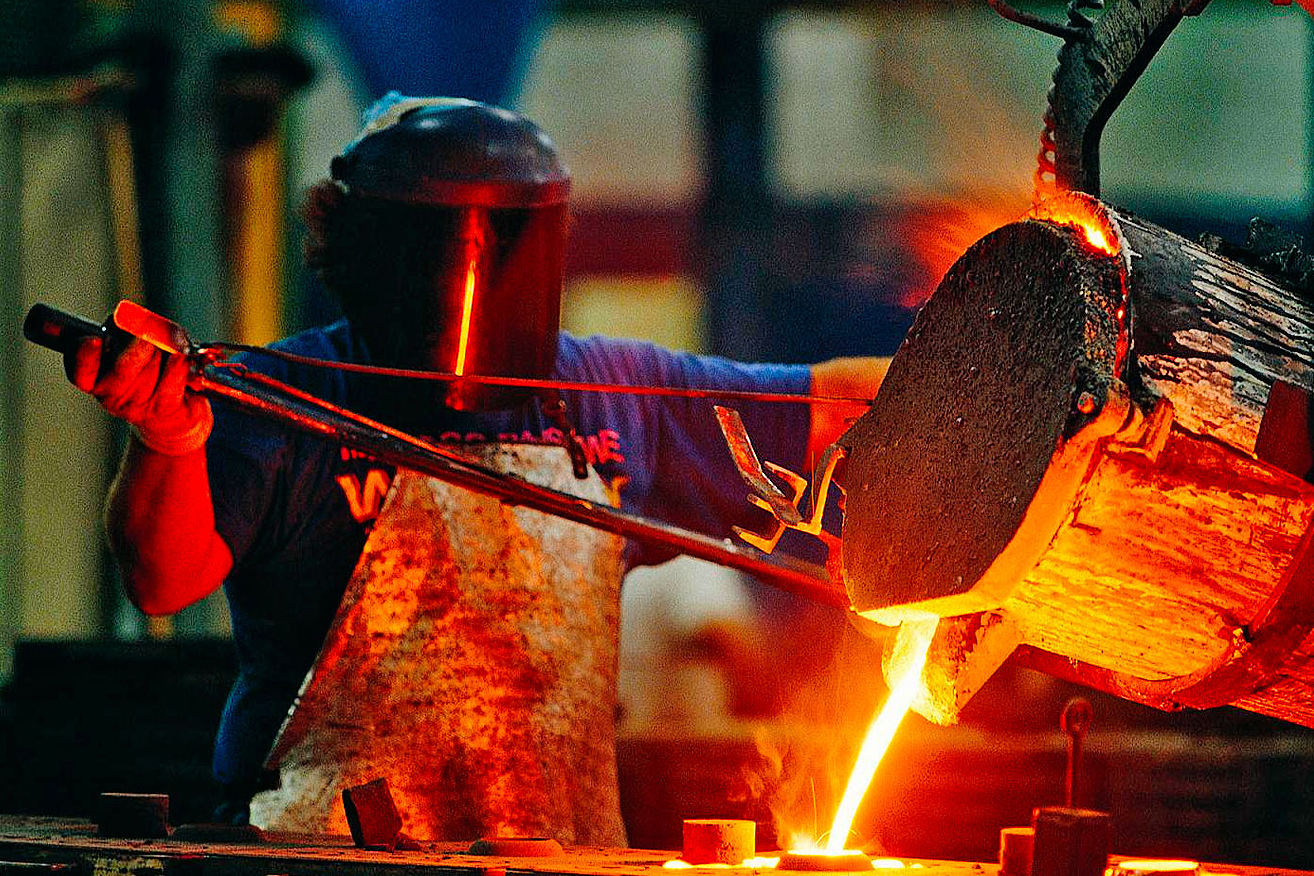
INVESTMENT CASTING

La fundición a la cera perdida, también conocida como fundición a la cera perdida, es un proceso de fundición de precisión que proporciona flexibilidad de diseño y ventajas de costo significativas.

Investment casting is an industrial process based on lost-wax casting or precision casting.

La fundición de revestimiento deriva su nombre del patrón que se invierte (rodea) con un material refractario. Muchos materiales son adecuados para la fundición de revestimiento; ejemplos son las aleaciones de acero inoxidable, el latón, el aluminio, el acero al carbono y el vidrio. El material se vierte en una cavidad de un material refractario que es un duplicado exacto de la pieza deseada. Debido a la dureza de los materiales refractarios utilizados, la fundición a la cera perdida puede producir productos con cualidades superficiales excepcionales, lo que puede reducir la necesidad de procesos de maquinaria secundarios.

El proceso puede utilizarse tanto para pequeñas piezas fundidas de unas pocas onzas como para grandes piezas fundidas que pesen varios cientos de libras.

La fundición de revestimiento puede producir formas complicadas que serían difíciles o imposibles con otros métodos de fundición. También puede producir productos con cualidades superficiales excepcionales y bajas tolerancias con un mínimo de acabado superficial o de mecanizado requerido.

Advantages

  • Excellent surface finish
  • High dimensional accuracy
  • Extremely intricate parts are castable
  • Almost any metal can be cast
  • No flash or parting lines

Applications

Investment casting is used in the aerospace and power generation industries to produce turbine blades with complex shapes or cooling systems.[13] Blades produced by investment casting can include single-crystal (SX), directionally solidified (DS), or conventional equiaxed blades.

Investment Casting Materials
  • Carbon Steel
  • Stainless Steel
  • Nickel
  • Ductile Iron
  • Grey Iron
  • There are several advantages of using investment casting to get the part you designed. One such advantage is the ability to make more intricate forms—even forms with undercuts. Also, the investment casting process leaves a very smooth surface, which is created without a parting line—something that would be unavoidable in other processes.

    The accuracy of investment casting is second to none. Even parts with the higher precision can be casted with little to no machining or detailing required. And since the finished piece will need no welding or assembling, you save on time and cost that would be required using other methods.

    With new alloys developed that allow for more complex parts to be cast, the process of combining several parts together to get the intricate shape can be eliminated. This not only saves time and money, but it also diminishes the chances that an error could occur while combining the parts.

    One of the biggest advantages of investment casting is that it is possible to produce a very wide variety of products across different industries. This versatility is a definite plus over other casting methods that either have difficulty producing some designs or cannot produce them at all. Also, many different metals and alloys can be used in investment casting, diminishing the need for designers to worry about the production of the casting they have visualized.

Copyright 2020 © All rights Reserved.

MES, Inc. has been ISO 9001:2015 Certified since 2009.

Investment Casting Materials

¿Tiene alguna pregunta?

Pronto nuestro equipo se pondrá en contacto con usted para atender su solicitud.

¿Do you have any questions?

Soon our team will contact you to attend your request.